


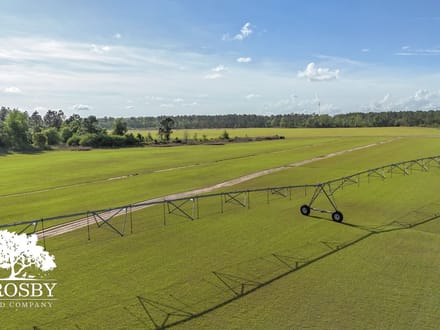
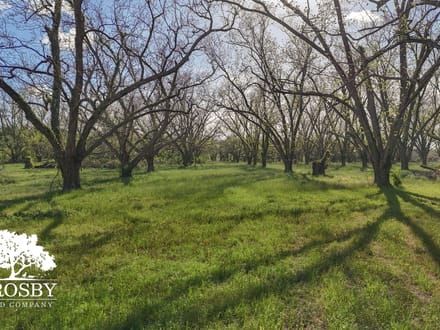
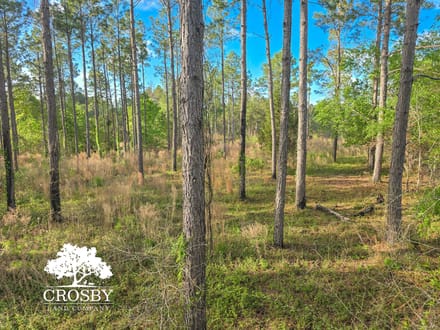
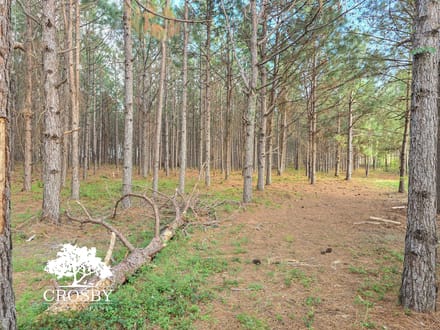


The most private timberland in the country
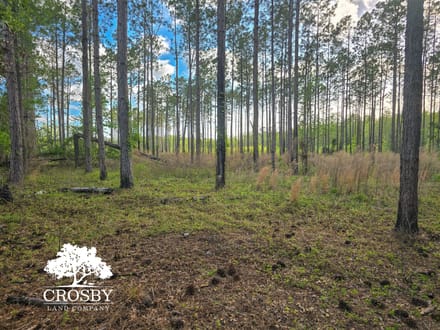
Georgia has about 24 million acres of forest, nearly two-thirds of the state, and leads the nation in privately owned forestland — more than 21 million acres of it in private hands. The forest industry supports over $59 billion in economic activity in the state. The reason is simple: the Coastal Plain grows pine fast. Its sandy loams, long growing season, and 48-plus inches of rain put a planted loblolly stand into its first commercial thinning in roughly 12 to 18 years, with a second thinning five to seven years after that and a sawtimber harvest at maturity.
What the timber is worth
Stumpage in South Georgia ran about $28 a ton for pine sawtimber and $23.50 for chip-n-saw in the third quarter of 2025, while pine pulpwood fell to roughly $9.50 a ton — a reminder that the age and product class of the timber on a tract matters more than the acreage. A 15-year-old stand ready for its first thinning is a different investment than three-year-old seedlings or a mature stand of sawtimber, and our agents can walk you through the timber age, species, and stocking on any tract below. Ask us about a timber cruise before you make an offer; we can arrange one.
Georgia taxes standing timber only once, at harvest or sale, on 100 percent of its fair market value — not every year as it grows. That is one of the quietest advantages of owning timber here.
Tax programs that reward long-term owners
Georgia’s Conservation Use Valuation Assessment (CUVA) assesses qualifying tracts at current-use value rather than market value in exchange for a ten-year covenant, up to 2,000 acres per owner. Larger holdings — 200 acres or more statewide — can use the Forest Land Protection Act (FLPA) covenant instead. Both can reduce ad valorem taxes substantially, both carry penalties for breaking the covenant early, and both are things our agents deal with on nearly every timber sale. Prescribed-burn permits are free from the Georgia Forestry Commission, and the GFC and UGA’s Warnell School are the two resources every Georgia timber owner should know.
Where we work in Georgia
Our agents work timberland across Georgia, with the deepest roots in the southeast and east-central counties — Bulloch, Screven, Effingham, Jenkins, Candler, Evans, Emanuel, Burke, Tattnall, Long, and Liberty — and we list tracts from the coast to Middle and South Georgia and beyond. Most timber tracts here also hold whitetail and Eastern turkey, and public land from the Chattahoochee National Forest in the north to WMAs like Tuckahoe on the Savannah River and Big Hammock on the Altamaha supports both the hunting and the resale value of land nearby.
Looking for a tract where the hunting comes first? Browse our hunting land for sale in Georgia, or the Georgia farms for sale and plantations for sale in Georgia if you want cropland or a turnkey estate. We also represent timberland for sale in South Carolina and timberland for sale in North Carolina — or see all land for sale in Georgia.
Frequently asked questions
How much does timberland cost per acre in Georgia?
It depends almost entirely on what is standing on it. Bare cutover ground, a ten-year-old plantation, and a mature sawtimber stand on the same soil can differ by a wide margin per acre, before you account for road frontage and distance to a mill. The listings above show live asking prices; if you own timberland and want a real number, request a free property evaluation.
How often does a Georgia pine stand produce income?
A typical planted loblolly rotation on the Coastal Plain gives a first commercial thinning at roughly 12 to 18 years, a second thinning five to seven years later, and a final sawtimber harvest at maturity — with the hunting improving each time the canopy opens. Longleaf grows more slowly but produces higher-value poles and sawtimber over a longer rotation.
Is timber taxed every year in Georgia?
No. Standing timber is assessed for ad valorem tax only once, when it is sold or harvested, at 100 percent of fair market value. The land itself is taxed annually, and CUVA or FLPA covenants can reduce that substantially.
What should I check before buying timberland in Georgia?
A recent timber cruise or inventory, the stand age and whether any timber has been sold or reserved, legal access for log trucks, whether the tract is under a CUVA or FLPA covenant and when it expires, wetland and stream buffers, and the burn history. We check all of these before we list a property, and before you buy one.
Own timberland in Georgia? Landowners across the Southeast trust Crosby Land Company to bring the right buyer at the right price. Get a free property evaluation — no cost, no obligation.
Accredited Land Consultant (ALC) on staff · Named to The Land Report’s 2026 America’s Best Brokerages · Licensed in South Carolina, Georgia, Alabama, North Carolina, and Florida
